Four Years of Building Inclusive Governance: CEGGA II Program Concludes in Laos
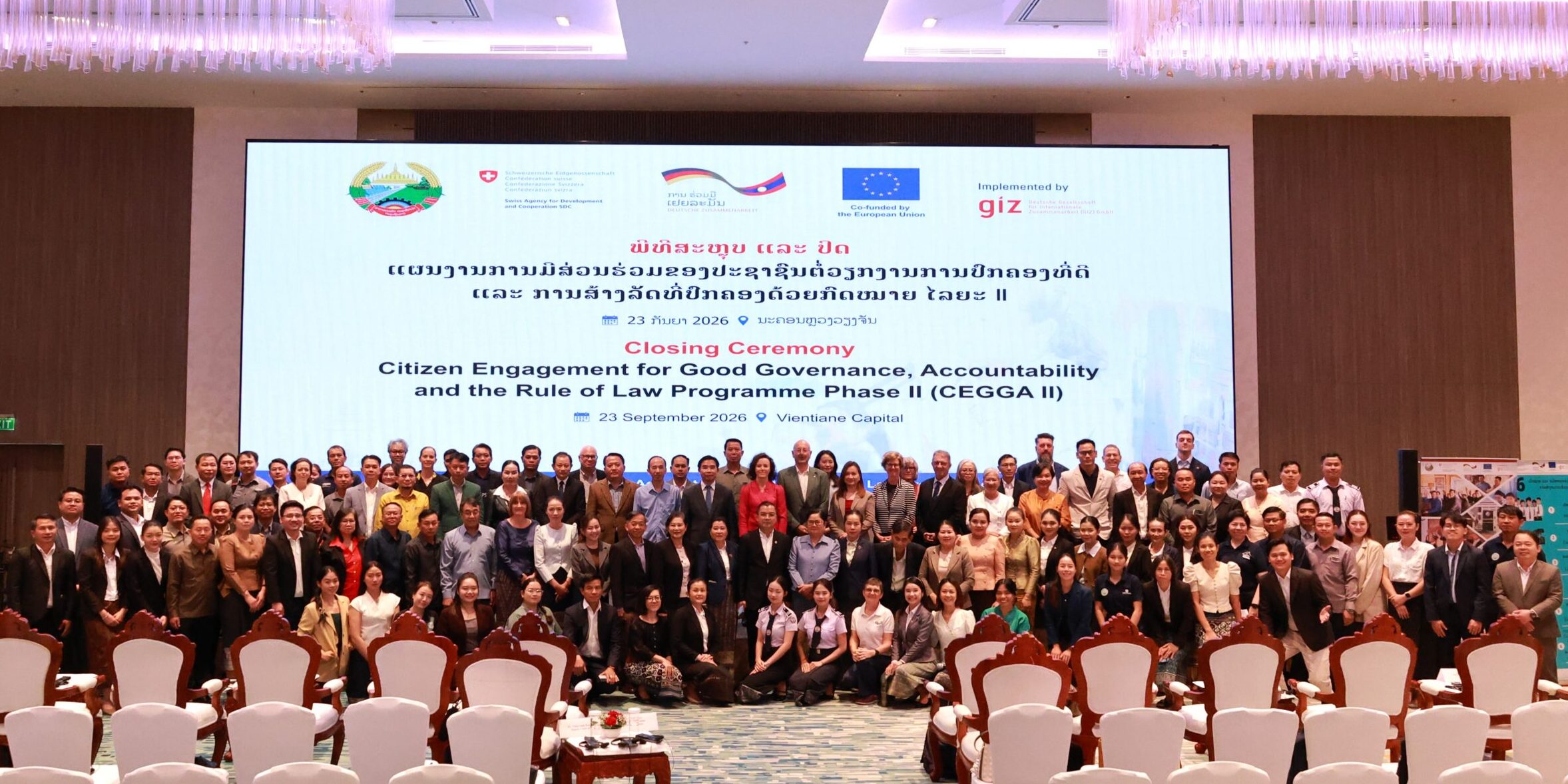
Meaningful governance starts with enabling citizens to participate in decisions that affect their lives. As the Citizen Engagement for Good Governance, Accountability and the Rule of Law Program Phase II (CEGGA II) nears completion after four years of work, stakeholders from government agencies, civil society groups, local communities and international partners came together in Vientiane Capital on September 23 to mark the program's achievements and reflect on its impact.
Vilayvanh Bouddakham, Deputy Chief of the Central Committee for the Organisation and Personnel, emphasized the alignment between the program's work and national priorities. "The initiatives we've developed and carried out together from the start reflect the Government's commitment to inclusive participation across all sectors. These collective efforts contribute to national development, and we will carry forward both the lessons and accomplishments of this program into our future work," he stated.
Launched in 2022 as a collaborative effort between Laos and Team Europe—comprising Switzerland, Germany and the European Union—and delivered by GIZ, CEGGA II concentrated on three interconnected governance priorities: empowering civil society participation, creating pathways for citizen involvement in decision-making, and enhancing both access to justice and awareness of legal rights.
Community Impact and Civil Society Growth
The program's closing event featured panel discussions, TED-format talks and partner testimonials that demonstrated how program activities produced concrete results on the ground.
Civil society organizations have become increasingly influential in local development efforts throughout the country. The CEGGA Small Grants Mechanism funded 32 community-led projects nationwide, reaching over 100,000 people while building organizational capacity and supporting marginalized populations. The program also facilitated increased interaction between government bodies and civil society, notably through CSO Fairs that enabled more than 70 organizations to engage with communities and broader audiences.
Expanding Citizen Participation
Citizens gained new channels to communicate with elected representatives and officials. From 2024 through 2026, Provincial People's Assemblies in Luang Prabang and Khammouane provinces connected with over 87,000 residents through public consultations, petition processes and telephone hotlines. Women represented 45 percent of those who participated.
The program placed particular emphasis on women's political representation, providing training to more than 400 women running for office prior to the 2026 parliamentary elections. This support contributed to women winning 29.71 percent of National Assembly seats, up from 21.92 percent in the previous term.
Making Justice More Accessible
For communities across Laos, understanding and accessing legal services has become more straightforward. CEGGA II backed legal literacy initiatives, mobile legal clinics and Clinical Legal Education programs that paired law students with communities, connecting academic training with practical application. Over 25,000 villagers received legal information, while more than 2,100 village leaders participated in training sessions.
These outcomes emerged from sustained cooperation among Lao government institutions, civil society actors, communities and European development partners. The program's value extends beyond statistics and individual projects—it lies in the strengthened partnerships, expanded opportunities for dialogue, increased trust and enhanced institutional capacities that will continue supporting inclusive development in Laos.
While CEGGA II's implementation phase is ending, the work of fostering citizen engagement, constructive dialogue and responsive governance moves forward.