Mekong Countries, Dialogue Partners Mark 30 Years of Regional Water Cooperation
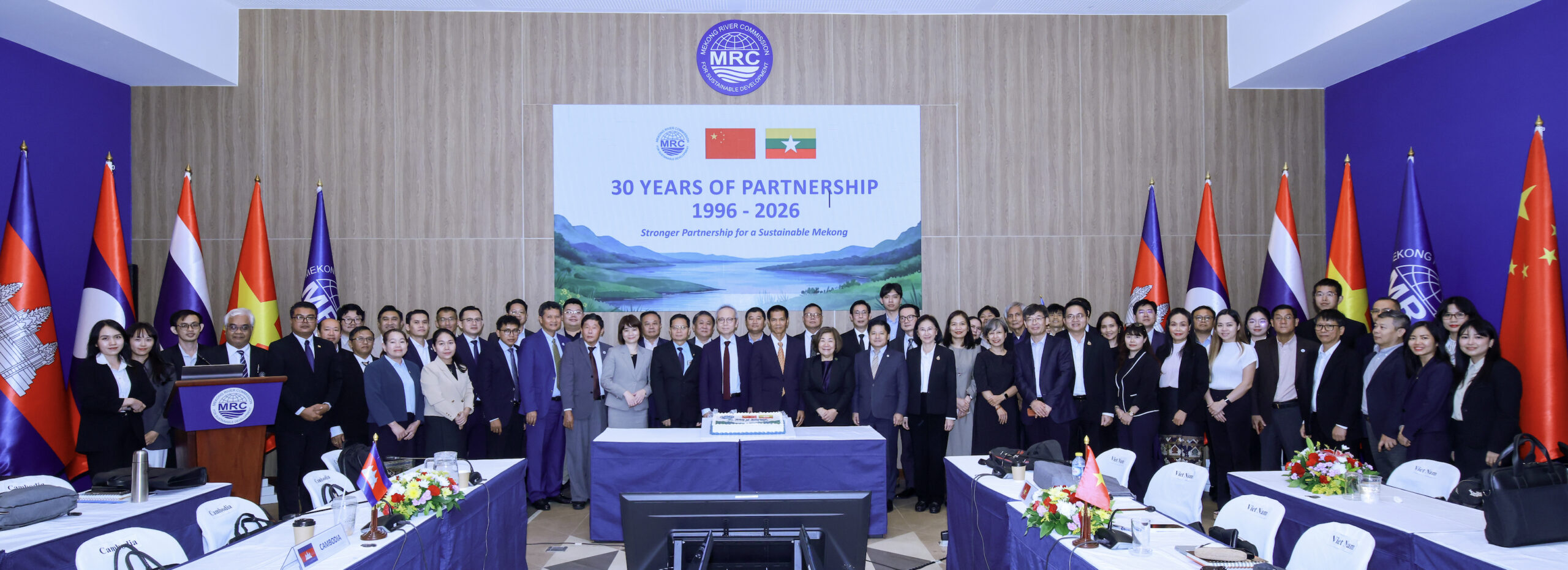
Six countries along the Mekong-Lancang River Basin gathered in Vientiane on September 18 to mark 30 years of formal dialogue on shared water resources, amid growing pressures from climate change and shifting river conditions.
The Mekong River Commission (MRC) hosted the milestone 30th Dialogue Partners Meeting at its Secretariat, bringing together the four Lower Mekong Basin member states — Cambodia, Laos, Thailand, and Vietnam — along with upstream partners China and Myanmar.
A Partnership Born in 1996
The dialogue traces its roots to July 26, 1996, when the first meeting convened in Bangkok. Over three decades, the format has given the six riparian nations a platform to share hydrological data, update flood and drought forecasting, and coordinate responses to shared water challenges.
So Sophort, Secretary General of Cambodia's National Mekong Committee and chair of the MRC Joint Committee for 2026, recalled the founding commitment: all riparian countries pledged to exchange information on Mekong activities and work together to manage the river's resources sustainably for the benefit of their populations.
"This cooperation has become increasingly important, particularly when the Mekong-Lancang River Basin faces growing environmental and socio-economic challenges, including the escalating impacts of climate change and weather variability," he said.
China Pledges Broader Data Sharing
China has provided hydrological data from its Yunjinghong and Manan stations for 24 consecutive years, switching to year-round reporting in November 2020. Xu Jinsong, a counsellor at the Chinese Embassy in Thailand, said the six nations have agreed in principle under a Memorandum of Understanding to share hydrological information across the basin.
"The six countries should achieve the goal of sharing full information on the Lancang Mekong River Basin as early as possible, which will help strengthen upstream and downstream coordination to address the challenges of flood and drought disasters together," he said.
China also proposed expanding cooperation to include urgent river notifications, wider basin-wide data exchange, and joint work on flood forecasting and drought response.
Joint Study on Climate Adaptation Advances
Delegates reviewed Phase 2 of a Joint Study examining changing hydrological conditions and adaptation strategies. The effort combines expertise from the MRC, the Lancang Mekong Water Resources Cooperation Center, Myanmar, and technical teams from all six countries.
The updated analysis draws on 22 Global Climate Models and three climate scenarios, with linked models covering the Mekong mainstream, the Tonle Sap system, and the Mekong Delta. Regional and national consultations are scheduled for October, followed by an expert group meeting on data, modelling, and forecasting in November, with a final technical report expected for endorsement before year's end.
Water Quality Concerns and Myanmar's Progress
The meeting also addressed water quality issues following the detection of arsenic contamination in the Kok, Sai, and Ruak Rivers in northern Thailand and their confluence with the Mekong in 2025. Routine monitoring at 15 mainstream stations showed that most results from January through June 2026 fell within MRC guideline values for protecting human health and aquatic life. Participants stressed the need for continued monitoring and stronger information sharing.
Myanmar reported on its national water management progress, including the adoption of a National Surface Water Quality Standard in 2024. Ongoing initiatives include a national flood and drought portal, automated water level and rainfall monitoring in border areas, and water quality assessments in the Mekong and its tributaries in Shan State. Deputy Director General Aung Kyaw Moe of Myanmar's Environmental Conservation Department affirmed the country's commitment: "We must continue to work together to protect our shared water resources."
Planning for the Basin's Future
Delegates received updates on Proactive Regional Planning, an initiative that integrates water, food, and energy needs into a single basin-wide assessment. The upgraded MRC Decision Support Framework is now operational and is being used to revise development scenarios and the Initial Adaptive Basin Plan, with national consultations and expert reviews continuing before finalization in early December 2026.
MRC Secretariat CEO Busadee Santipitaks closed the meeting with a call for sustained commitment: "Trust in river cooperation is built through consistent action — sharing data as agreed, communicating changes in a timely manner, with a view for better preparedness and protection of the Mekong and its peoples."